

Procrastinators aren’t really afraid of effort. In fact, sometimes we put in great effort to avoid a task others would dispatch in a few minutes.
What we’re really afraid of is the emotional pain the task might cause: confusion, loss, frustration, humiliation.
You might put off a phone call because you’re afraid you won’t know what to say and it will be embarrassing. You might put off studying algebra because it makes you feel overwhelmed and dumb.
The greater the expected emotional pain, the stronger the impulse to put it off.
One super-common type of emotional pain procrastinators fear (especially ADHDers) is cognitive overwhelm.
That’s when a task has so many moving parts that you feel like you have to hold too much information in your head at once. More than your head has room for.

Trying to keep too much in your head at once is painful, especially if there are penalties for messing up.
Imagine your job was to add up numbers in your head, every twenty seconds or so. When the sums are something like 3 + 5, or even 11 + 9 + 2, it’s manageable.
But imagine the sums get harder, such as 60 + 125 + 79, and they keep coming.
It gets more stressful. At a certain point, you start to hit your cognitive limits.

This feeling of cognitive overwhelm feels awful. The task that won’t fit inside your brain isn’t just challenging to do, it’s painful and demoralizing to even try. It feels like you’re drowning.
When every task feels like a Rubik’s Cube
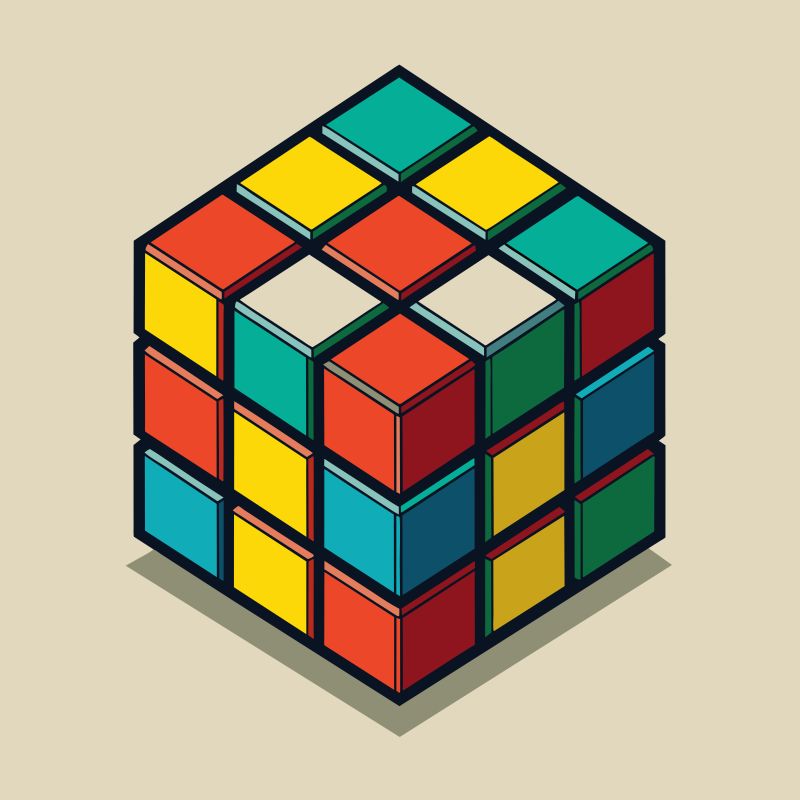
Beginning any complex task can feel overwhelming, especially if you tend to hit your cognitive limits easily.
Say your task is to plan a surprise party for a friend. You have to decide the guest list, select a date that works for people, and order food for everyone.
You begin by listing some guests you might invite. Then you consider possible dates. Your friend works Fridays, but three of these guests can’t do Saturdays. Does Thursday work for everyone?

You should contact people and ask which days work. But how exactly? Are you going to send a batch email with all possible dates, spawning an endless reply-all-fest with fifteen people? Also — if you’re going to order food, you need to ask people’s food preferences. But to do that, you need to establish the guest list first. But you have to establish the date to know the actual guest list. And some restaurants aren’t open every day of the week. So you have to decide the food first. Aaaaaaaaaa!
You decide to deal with this whole teetering mess later, and suddenly it’s Tuesday of birthday week and you have no idea what you’re doing.
Tasks with too many interconnecting factors feel trying to solve a Rubik’s Cube: every move undoes or complicates something else. You feel like you’re shoveling floodwater from one side of the basement to the other. Meanwhile, it’s still raining.

Three ways ADHD makes all this worse
ADHD makes this overwhelm issue worse in several ways.
For one thing, the ADHD brain has poor working memory. You have less “mental desktop space” on which to arrange the relevant information, so you hit your limits more easily.
Second, the ADHD brain makes connections to additional, possibly-relevant information very rapidly. Other considerations fly into the mind like moths to a lamp. What about drinks? Will Charlotte come if the rest of us are drinking? Should I say no alcohol? Is this important? I have no idea. This is sounding expensive… what’s a reasonable budget? Should I ask people to pitch in? I don’t even know who’s coming yet! And cake! What size of cake? How many people with there be? I don’t know! AAAAAAAA!
Third, you’re already pretty traumatized. Having lived your whole life under threat of overwhelm, your ADHD brain expects to be overwhelmed. You develop a kind of “mental claustrophobia,” where any hint of trickiness or complexity triggers you. And most tasks are like this: planning a party, fixing a printer, buying insurance, etc.
Your ADHD brain, thirty seconds into planning your YouTube channel:

To get away from the threat of overwhelm, you know you can always pull the old trusty ripcord — you can decide to simply deal with this thing later.
The parachute deploys, and the relief whooshes in, for the moment. Meanwhile, “later” is already packed to the rafters. And you haven’t solved anything.
A simple way to get started on any complex task
If a prospective task starts to seem like a Rubik’s Cube, or a big squirmy octopus, here’s one way to simplify it enough to start.
Take a few minutes and write a fake email to a friend, describing your dilemma. You can vent a little, but mostly you just want to describe what’s hard for you about the task. You can address it to real friend or a fake one. (Don’t actually send it.)

Something clarifying begins to happen when you write this email: your thoughts have to slow down enough for you to articulate the problem. You end up considering the task one sentence at a time, and pretty quickly you can see the trouble spots.
I feel like I have to get the guest list done before I can do anything else.
I’m also worried people will get upset about the food I order.
Hmm… maybe that’s it.
Now it’s not such an insurmountable problem. Pick the guests, pick a date, pick the food, send the invites. People will come if they can. Probably nobody will be too upset about anything.

The email constraints the mind, keeping it from exploding into the thought-octopus. The ADHD mind tends to be very reactive. When it feels afraid, it generates even more thoughts, and adds them to the problem. More sides to the Rubik’s Cube. (Or more writhing tentacles.)
Writing a fake email to a friend reverses this process. It slows your thinking down to a one-thought-at-a-time pace, allowing you to process the task calmly and without overwhelm, turning it into a task you can actually do today.
Even lifelong procrastinators can get things done every single day if they have a reliable method designed for their brains. Here’s mine —> Get the How to Do Things ebook
***
Help other productivity-challenged people. Share this post.
Don’t wait for the next life.
We help procrastinators and ADHDers pull off their goals and dreams.
You choose your quest. We’ve got your back.